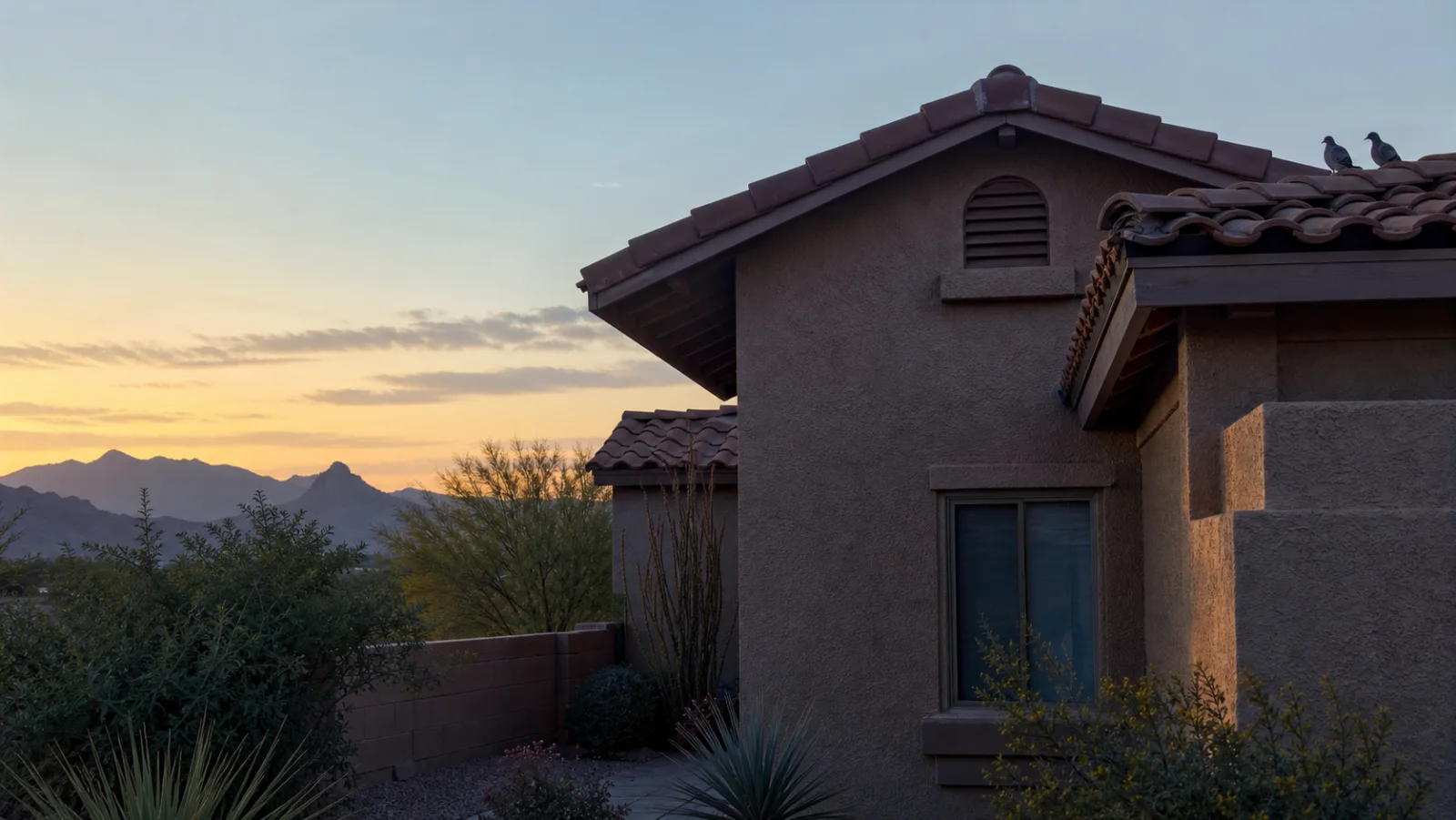
What matters at a Goodyear property
The City of Goodyear publishes guidance for dead animals in public areas. For a private structure, document where odor is strongest and whether there are flies, staining, or a known entry route.
Signs worth mentioning on the call
Odor concentrated near one wall, ceiling, vent, or cabinet
Fly activity near a structural area
A known animal entry followed by silence
A carcass visible in a yard or public area
Get from wildlife signs to a clear removal plan.
Explain where the activity is happening and what you observed. That helps the wildlife professional plan the inspection, animal work, repairs, and cleanup.
A safer sequence before work begins
- 1
Determine public versus private property
- 2
Avoid opening unsafe walls or ceilings without a plan
- 3
Ask whether locating, removal, sanitation, and repair are separate
- 4
Correct the entry route after the source is addressed
Safety and agency flag
Do not handle an unknown carcass barehanded. Use the City of Goodyear route for applicable public-area cases and emergency channels for immediate hazards.
Questions to ask before authorizing work
- Does the provider locate inaccessible sources?
- Are wall or ceiling openings and repairs included?
- What sanitation is performed after removal?
- Should the city handle this location instead?
Primary and official sources
Verify the current guidance
Common questions
Before you make the call
Will the city remove a dead animal from my house?
The city resource is for applicable public-area routing. Private-property and in-structure work generally requires a private solution.
Does odor treatment remove the source?
No. Deodorizing without locating and removing the source can mask rather than solve the problem.