
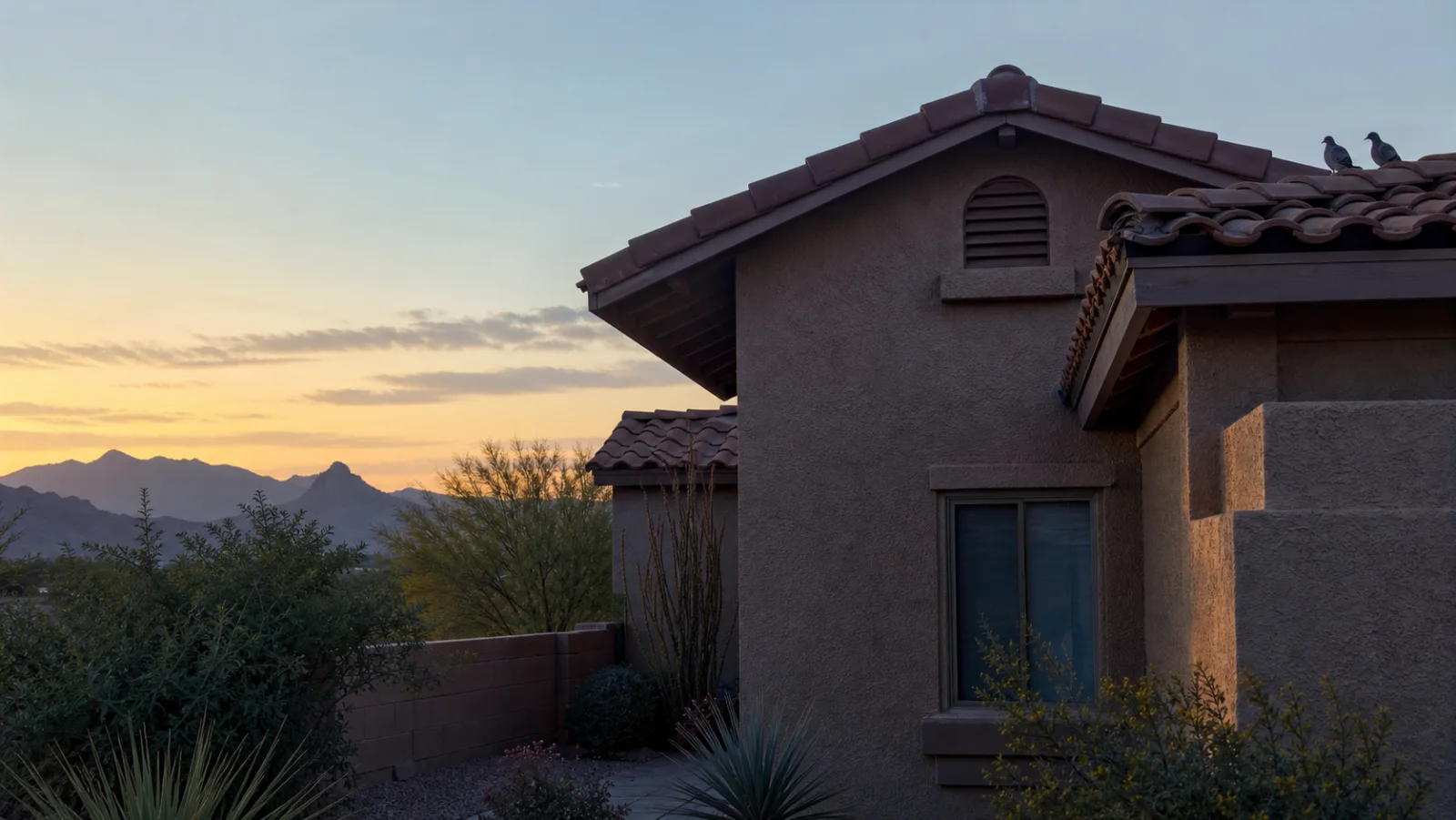
What matters at a Goodyear property
Record whether the noise starts during daylight, at dusk, or overnight and whether it stays near one roof section. A safe ground-level photo can help; avoid climbing onto the roof.
Signs worth mentioning on the call
Daytime movement can suggest birds or small mammals
Dusk flight at one point can suggest bats
Nighttime scratching can suggest rodents
Odor or flies can suggest an inaccessible carcass
A safer sequence before work begins
- 1
Keep people and pets away from the space
- 2
Log time, sound, and room location
- 3
Inspect only from safe accessible areas
- 4
Request animal confirmation before exclusion
Safety and agency flag
Do not enter an overheated or unsafe attic, disturb droppings, or seal an active opening before animals and young are accounted for.
Questions to ask before authorizing work
- Does the quote identify the likely entry point and the animal evidence?
- Are inspection, removal, exclusion repairs, cleanup, and follow-up priced separately?
- What happens if the animal cannot be confirmed during the first visit?
- Who handles permits, protected species, or public-health escalation if needed?
Primary and official sources
Verify the current guidance
Common questions
Before you make the call
Can roof tiles simply be sealed?
Only after active routes, ventilation needs, and animals are accounted for. A partial seal can move activity elsewhere in the structure.
Does sound prove the species?
No. Timing and sound are clues that need exterior evidence or direct confirmation.